
Château de Vaux-le-Vicomte: a communication strategy that quadrupled the use of its AI agent
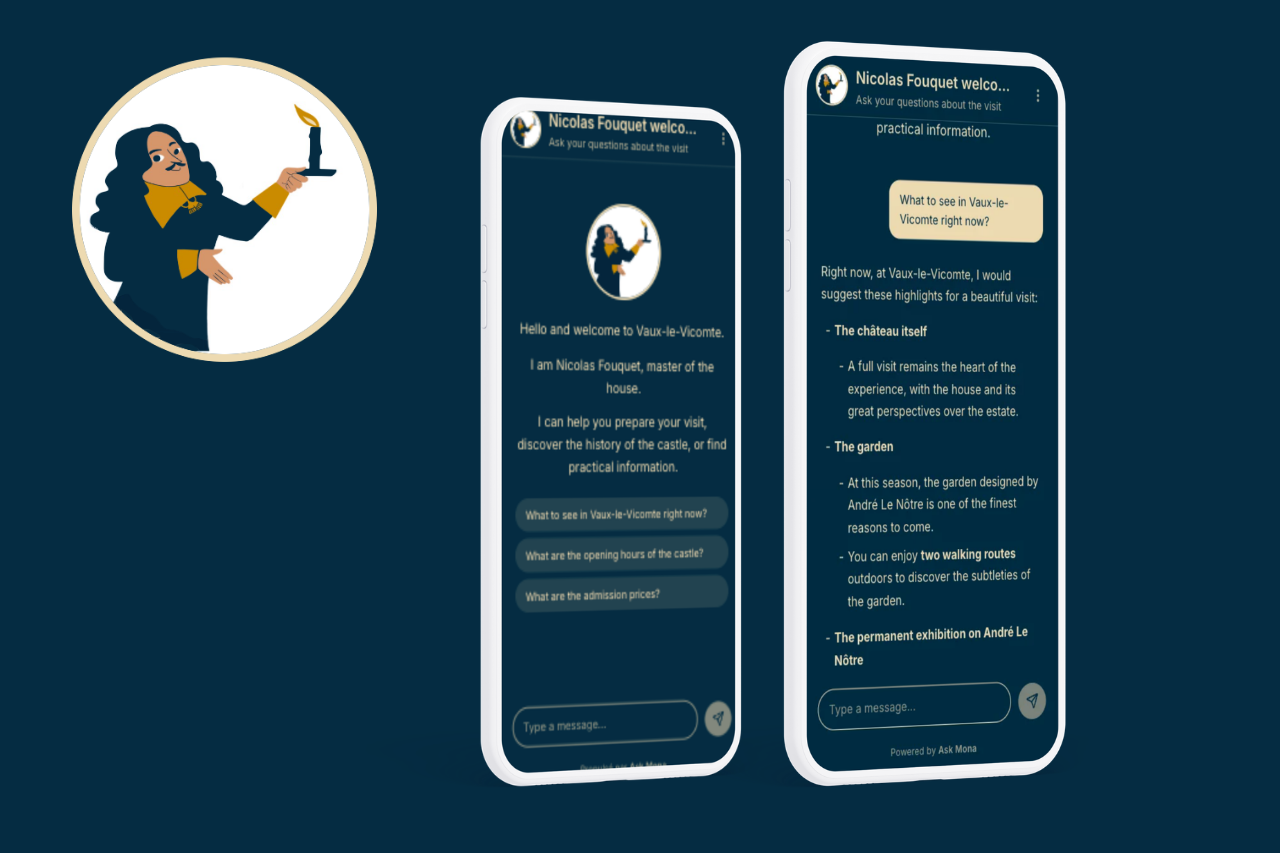
At Château de Vaux-le-Vicomte, a conversational agent embodied by Nicolas Fouquet helps visitors prepare for their visit. A targeted communication strategy increased the number of messages exchanged each day fourfold. This growth highlights a key factor in the success of a conversational agent: performance depends both on the quality of its answers and on how effectively it is integrated into the visitor journey.
An agent designed to make visit planning easier
By giving Nicolas Fouquet a voice, Vaux-le-Vicomte grounds its conversational agent in the estate's history and identity. This embodiment makes the experience more memorable while serving a practical purpose: helping visitors quickly find the information they need to plan their visit.
95% of conversations with the agent relate to practical information, including admission prices, ticketing, bookings, opening hours, visit duration, Candlelit Evenings, dining options, access and parking.
In three months, the agent handled the equivalent of nearly 200 hours of visitor enquiries, representing around six weeks of full-time work.
The most common questions concern activities available at the estate, admission prices and opening hours. The agent can, for example, provide the price of garden admission together with a direct link to the ticketing page, or check whether a ticket is valid based on the event calendar.
Visitors therefore have access to reliable, immediate information at any time.
This volume of enquiries also demonstrates the value of providing a conversational access point for practical information. Prices, opening hours and booking conditions often depend on the context of a particular visit and require precise answers. Instead of navigating through several pages of the website, visitors can ask their question directly and receive information relevant to their situation.
At Vaux-le-Vicomte, the agent therefore provides a new gateway to information the estate has already produced. The challenge is not only to make that information available, but also easier to access, allowing each visitor to go directly to the answer they need.
A targeted communication strategy to drive adoption
To increase adoption of the service, Ask Mona and the Vaux-le-Vicomte teams worked on several communication initiatives: making the agent more visible across the website, publishing a dedicated article about the service, adapting automated messages for visitors, and positioning Nicolas Fouquet more clearly as a gateway to practical information.
These initiatives make the agent's role immediately understandable. On its website, for example, Vaux-le-Vicomte highlights concrete situations in which Nicolas Fouquet's AI can help visitors prepare for their visit: finding out how much time to allow, checking whether dogs are permitted, discovering seasonal events or deciding where to have lunch on site.
The article also explains that information previously spread across different pages of the website can now be accessed simply by asking the agent a question.

The communication strategy also brings the discovery of the service closer to its actual use. After explaining how the agent works and providing examples of questions visitors can ask, the article includes a CTA inviting them to try Nicolas Fouquet directly.
Visitors therefore understand what the agent can offer before they even start a conversation.
The work focuses both on making the service visible and on making its value immediately clear. To start a conversation, visitors need to understand where to find the agent and in which situations it can help them.
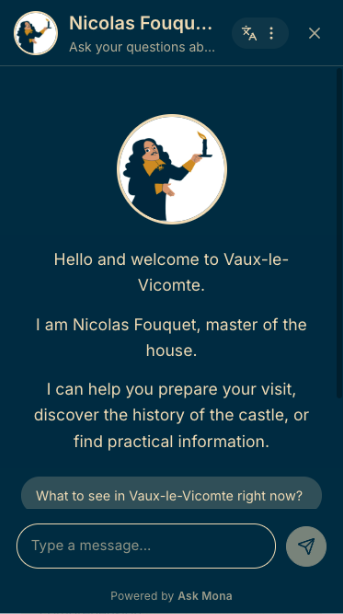
Following these initiatives, the daily volume of messages increased almost fourfold.
Continuous monitoring to strengthen adoption
The work carried out with Vaux-le-Vicomte continues after the agent goes live. Ask Mona regularly monitors how the service is used to understand how visitors engage with it and which topics generate the most enquiries.
Conversation analysis shows that visitors use the agent across a wide range of topics, from events and dining options to transport and access conditions. This data gives the teams a concrete view of how the service is being used.
These insights are regularly shared with the Vaux-le-Vicomte teams and inform ongoing adjustments to the service. This extends the work carried out at launch by allowing the agent to evolve based on actual visitor behaviour.
From launch to long-term adoption
The Vaux-le-Vicomte project shows how a targeted communication strategy can directly influence the adoption of a conversational agent.
Designing the service is the starting point. Its visibility, its integration across different visitor touchpoints and the regular analysis of conversations then help unlock its full value for both visitors and teams.

Turn your AI agent into a key visitor touchpoint



Take the
next step