
Where Do Your QR Codes Go? The "Great Discrepancy" in Beauty Packaging
Mar 4, 2026
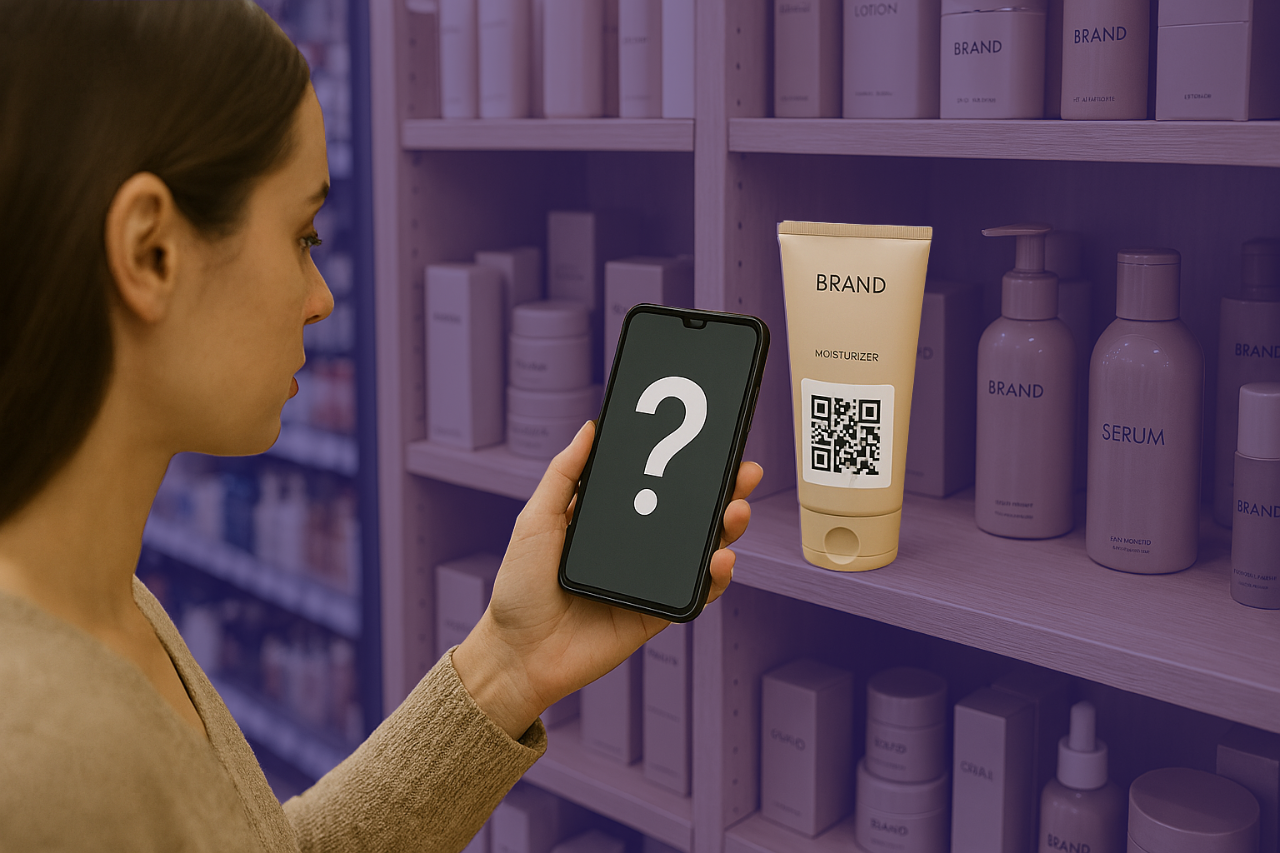
63% of beauty QR codes lead to D2C sites, but is that what shoppers really want? We analyzed the redirection strategies of 100 brands to uncover the ultimate customer experience.
You have successfully encouraged a customer to scan your skin-care product in-store. Now, where do you send them? Our 2026 audit of 100 brands reveals a massive disconnect between customer expectations and brand execution.
The Current Redirection Landscape
- The "Direct to Consumer" Norm: 63% of QR codes redirect to the brand's own e-commerce site. This shows that D2C is now the accepted standard.
- The "Multi-Channel" Compromise: 29% redirect to a branding site that links out to third-party resellers. This spares the brand from logistics complexity but makes them lose the direct-to-consumer relationship.
- The "Dead Ends": A shocking 4% redirect to "exotic" links like YouTube or Instagram (distracting the user from purchasing), and 2% lead to broken links or marketing storefronts with no commerce capability.
The Missed Opportunity: 92% Fail to Converse
The most critical finding is that a staggering 92% of brands fail to offer conversational engagement. Only 8% of brands currently integrate an AI Agent.
- The Current Standard: Redirecting to a classic HTML product page with standard e-commerce buttons.
- The Future Standard (AI-First Navigation): We predict a shift toward AI-First navigation. Flashing the QR code triggers an immediate, voice-powered dialogue rather than displaying a webpage. Access to the checkout becomes a seamless secondary step offered after the visitor is satisfied and convinced.

Which brands are leading the way? Which are sending traffic to broken pages?
Access the full "Cosmetics 2026" Benchmark here.

Download Full Report



Take the
next step
Every engagement is bespoke, from team training to executive-level AI governance. Want to learn more?
From artworks to products, Ask Mona turns content into conversations — and conversations into insight.
© All rights reserved, Ask Mona