
Château de Chambord: Training Teams to Use AI Ethically and Effectively
About
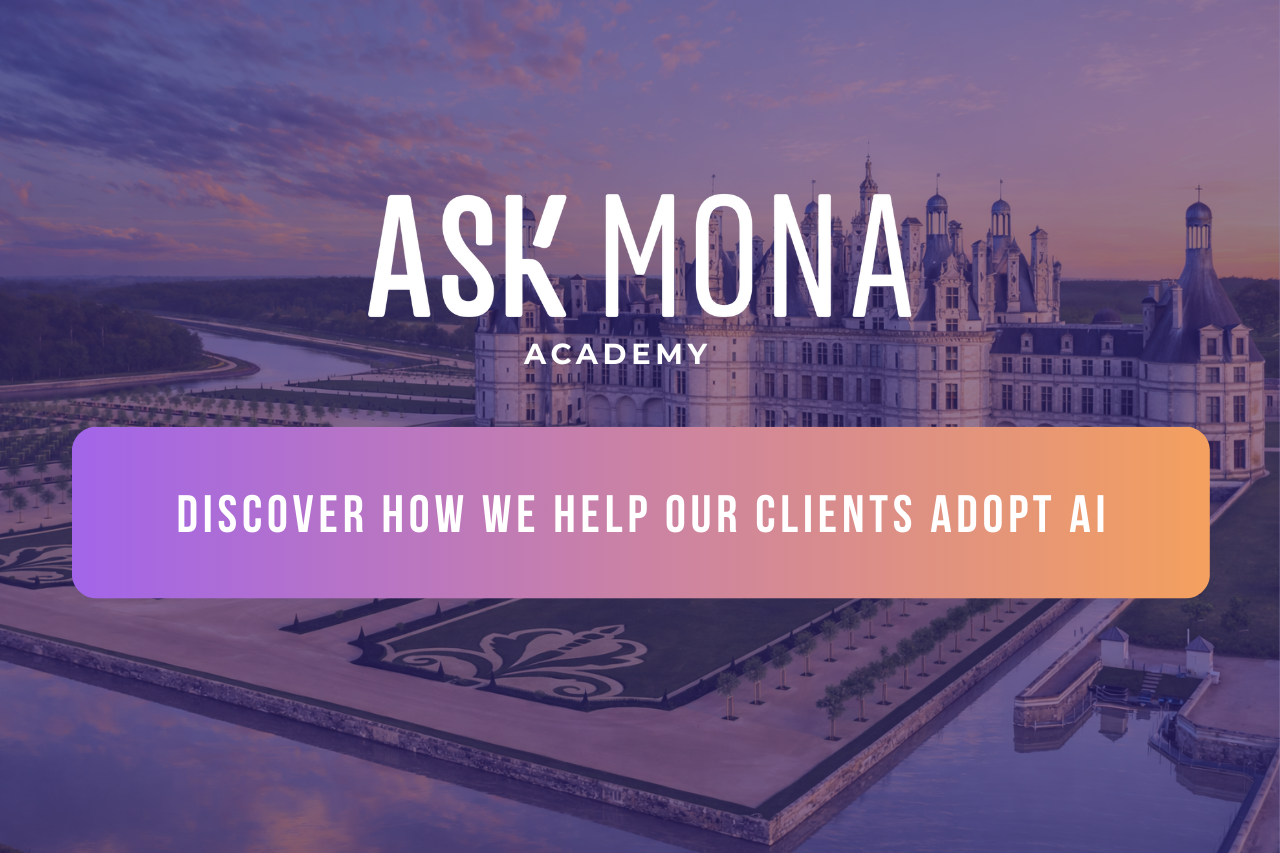
An iconic monument of French heritage, the Château de Chambord combines a cultural mission with the challenge of welcoming a wide variety of audiences, while maintaining high standards in terms of rigor, knowledge transmission, and data protection.
Within the institution, the Department of Patronage, Development and Communication oversees high-impact initiatives where artificial intelligence can quickly become a powerful accelerator, provided it is properly understood and governed.
Our Objectives
As AI gradually finds its way into daily work practices, a gap tends to appear quickly: some people start experimenting, others remain hesitant, and everyone is asking the same questions.
What can we trust?
What are the risks?
What is genuinely useful in our day-to-day work?
And most importantly, how do we prevent AI from being adopted “by default,” without clear guidelines, safeguards, or shared alignment across the team?
These questions led the Château de Chambord to invite Valentin Schmite, co-founder and CEO of Ask Mona, with three highly practical goals:
- Bring everyone up to speed despite widely varying levels of familiarity with AI
- Establish clear best practices, particularly regarding data security and inappropriate uses
- Help the team identify a coherent stack of tools, so they can make informed choices and equip themselves without scattering their efforts
Key Figures
- 1 dedicated training day
- 20 participants
- Around 15 AI tools tested, beyond ChatGPT
- 4.97 satisfaction score at the end of the session
- Tangible adoption observed two months later: AI has become part of everyday practices
The Solution: An Ask Mona Academy Training Program Combining Structure, Culture, and Hands-On Practice
At Ask Mona, we help cultural institutions adopt AI with confidence through a creative, ethical, and strategic approach designed to integrate innovation into everyday work.
For Chambord, the training was designed as a complete learning journey so that the day would not be just a general overview, but a real turning point.
1. A First Session to Understand, Navigate, and Build Confidence
The morning session focused on creating a shared foundation, which is essential when perceptions of AI range from enthusiasm to concern.
The team explored the impact of AI in the cultural sector through concrete examples of transformations already underway. A legal overview of AI and intellectual property clarified several gray areas, while open discussions addressed practical concerns raised by participants.
These included environmental considerations, ethical questions, doubts about reliability, and even the familiar budget discussions that often arise when paid tools enter the conversation.
2. A Second Session to Practice, Compare, and Build Real-World Reflexes
The afternoon moved into hands-on experimentation.
The goal was not simply to present tools, but to ensure that every participant actively used them, turning AI into a professional skill rather than a curiosity.
Through progressive exercises, participants learned how to write more effective prompts, identify genuinely relevant use cases, and understand the limitations of AI models in order to avoid unpleasant surprises when producing, publishing, or making decisions.
Importantly, the session deliberately went beyond ChatGPT. Chambord’s team experimented with around fifteen different AI tools, comparing their strengths, understanding how they complement one another, and identifying which ones made sense in their specific context.
This process of filtering and prioritizing is often what organizations lack, yet it is what ultimately saves time: less dispersion, more coherence, and deliberate technical choices.
Results: Measurable Skill Development and Real Adoption
The first signal was immediate: a satisfaction score of 4.97, reflecting a training day perceived as useful, clear, and directly applicable.
The second signal, and the most meaningful one, appeared over time. Two months after the training, AI usage had become tangible. In other words, AI did not remain at the stage of isolated experimentation. It had become integrated into everyday workflows, supported by shared reference points, clear safety guidelines, and a collective ability to choose the right tool for the right need.
Why It Works
This case highlights a key insight: effective AI training is not about stacking demonstrations, but about combining three mutually reinforcing elements.
- A shared foundation that aligns skill levels and addresses fears through understanding
- A clear framework for data security, acceptable uses, and responsible limits
- Guided practice that transforms learning into reflexes, and reflexes into lasting habits

Interested in Training Your Teams Like the Château de Chambord?



Take the
next step