
AI Strategy: How the Château de Fontainebleau Is Turning Its AI Assistant into a Tool for Cultural Engagement
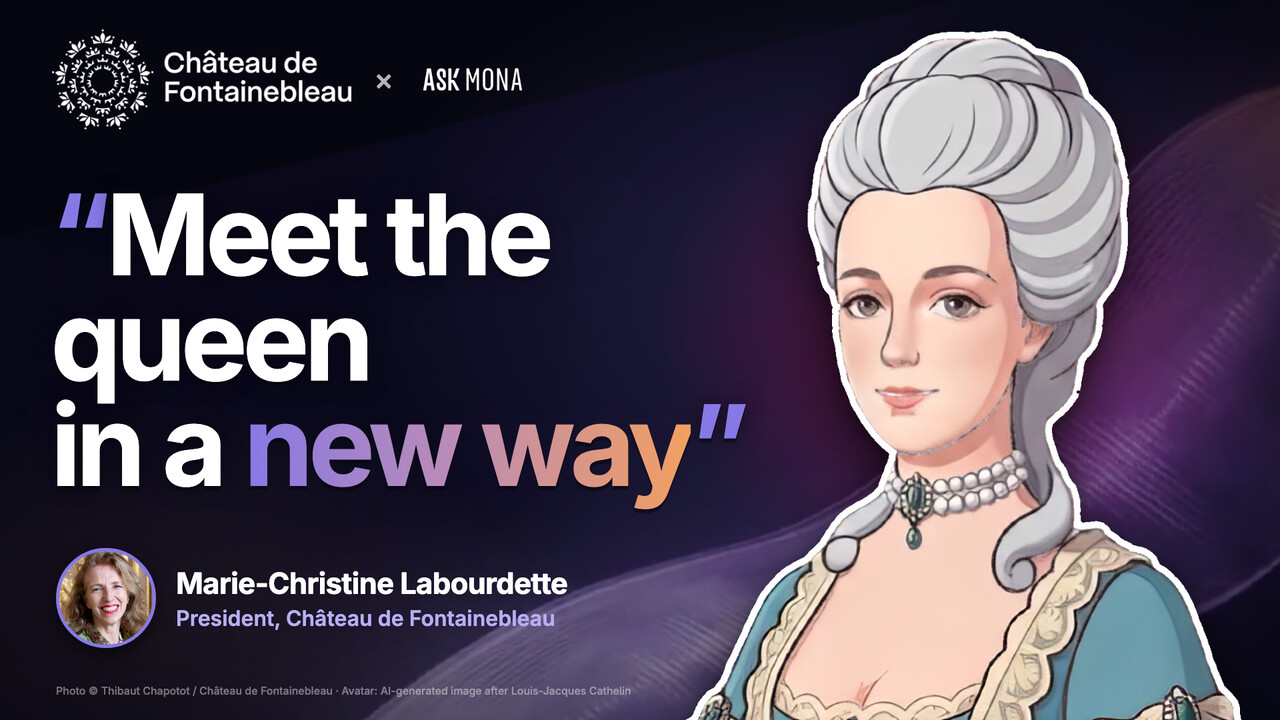
Brought to life through Marie Antoinette and connected to the Château’s cultural programme, the AI assistant developed with Ask Mona allows visitors to begin exploring before they even arrive.
“Is the Château open on Tuesdays?”
On the Château de Fontainebleau’s website, it is now Marie Antoinette herself who answers:
“No, the Château is closed every Tuesday. […] Even the grandest residences need a moment to catch their breath. The courtyards and gardens, however, remain open every day.”
The information is practical. But the way it is delivered already sets the tone for the visit.
Launched on October 8, 2026, Ask Marie Antoinette is a conversational AI assistant developed by Ask Mona in collaboration with the Château de Fontainebleau team. It answers visitors’ questions using content selected together with the institution, in French, English and Chinese. What makes it distinctive is the role it has been given: a character-led visitor information service directly connected to the Château’s cultural programme.
Turning Visit Planning into a First Moment of Cultural Engagement
For cultural institutions, the questions people ask before visiting offer an opportunity to start building a relationship with their audiences. Someone may be looking for opening hours, a family activity or information about an exhibition. They come with a practical need, but that initial question can also be the beginning of a discovery.
At Fontainebleau, we designed the assistant to accommodate these different interests within a single conversation. Marie Antoinette provides practical information about the Château while also answering questions about its royal apartments, court life and the artworks visitors can discover. Visitors choose what interests them and explore at their own pace, without needing any prior knowledge of historical terminology or following a predetermined route.
Marie-Christine Labourdette, President of the Château de Fontainebleau, describes this ambition:
“With Ask Mona, the Château de Fontainebleau is offering a new, more interactive and personalised visitor experience. Thanks to this chatbot, everyone can easily find answers to their questions and receive guidance based on their interests, while engaging in a new kind of dialogue with the Château’s history. By bringing Marie Antoinette to life, this new experience also offers visitors a different way to encounter the queen, just as our exhibition dedicated to her opens.”
Bringing together visitor services and cultural engagement is central to the project. The assistant helps people plan their visit while introducing the stories and context that will help them observe, understand and decide what they want to discover once they arrive.
Giving the Cultural Programme a Voice
The choice of Marie Antoinette is part of Fontainebleau’s programme dedicated to the queen and Louis XVI, including the exhibition Marie-Antoinette and Louis XVI at Fontainebleau: Splendour and the Art of Living.
Accessible through the Château’s website, the assistant provides a new way for audiences to engage with this programme. Visitors can ask questions directly to the historical figure at its centre, discover the exhibition’s themes and begin imagining the spaces they will explore.
When asked, “What shouldn't I miss in the exhibition?”, Marie Antoinette replies:
“Above all, don't miss the drawings of the major architectural projects of the 1770s and 1780s, the exquisite furniture crafted by Jean-Henri Riesener, and the Silver Boudoir, whose delicate wood panelling from 1786 is among the most precious surviving features of my apartments.”
Specific names, objects and places turn a general interest into something more tangible. Through visitors’ questions, the exhibition becomes part of the conversation.
For cultural institutions, this approach creates an opportunity to bring digital visitor services and cultural content together. An exhibition can shape the assistant’s conversations, while the chosen character can bring its themes to life and guide visitors’ curiosity towards the artworks.
Creating a Character That Stays True to the Institution and Its History
Bringing a historical character to life requires careful editorial and research work. Together with the Fontainebleau team, we defined Marie Antoinette’s personality, the way she addresses visitors and the boundaries of what she can say.
Her character profile describes her as “regal and elegant, lively and curious, slightly refined, playful and occasionally mischievous”. She addresses visitors politely and formally. Her tone must remain consistent, even when answering a straightforward question about opening hours.
This attention to character goes hand in hand with historical accuracy. In a château shaped by centuries of history, the queen must be able to distinguish her own era from those that followed.
“Did you ever meet Napoleon here?”
“No, never. My last stays at Fontainebleau took place in 1786, whereas Napoleon I belongs to a later period. We could therefore never have crossed paths here, even in the very same corridors.”
The responses quoted here were collected on October 9, 2026.
The content selected in collaboration with the Château’s team forms the foundation of the assistant’s answers. Before its public launch, we also put it through a structured testing process, assessing practical questions, historical enquiries and attempts to steer it off course against predefined expectations.
Ask Mona’s role is to bring these requirements together: a distinctive voice, a knowledge base developed with the institution, and responses tested against realistic visitor interactions.
Extending the Visitor Welcome as the Institution Evolves
At Fontainebleau, this experience complements the Château’s existing interpretation and visitor engagement initiatives. It creates an additional space where people can freely ask questions, even before stepping through the gates.
Marion Carré, co-founder of Ask Mona, explains the thinking behind the project:
“With this experience, we wanted to make artificial intelligence a new gateway to the Château de Fontainebleau: one built around conversation. By giving Marie Antoinette a voice, we allow every visitor to explore the monument freely, ask the questions that matter to them and shape their own journey of discovery. This is exactly what drives us at Ask Mona: using technology to create a more personal, engaging and intuitive connection with cultural heritage.”
The experience was also designed to evolve. The Château is considering bringing other historical figures to life as its cultural programme develops. Each new character will involve fresh work on storytelling, content and the relationship the institution wants to build with its audiences.
For any museum or heritage site considering an AI assistant, this raises an important editorial question from the outset: whose voice should visitors hear, and what should that voice help them discover?
At Fontainebleau, answering this question has helped transform a visitor information service into a tool for cultural engagement before the visit even begins.

Planning an exhibition or looking to enhance your website’s visitor experience?



Take the
next step