
Christmas 2026: Ask Mona Will Bring the Historical Figure of Your Choice to Life as an AI Avatar
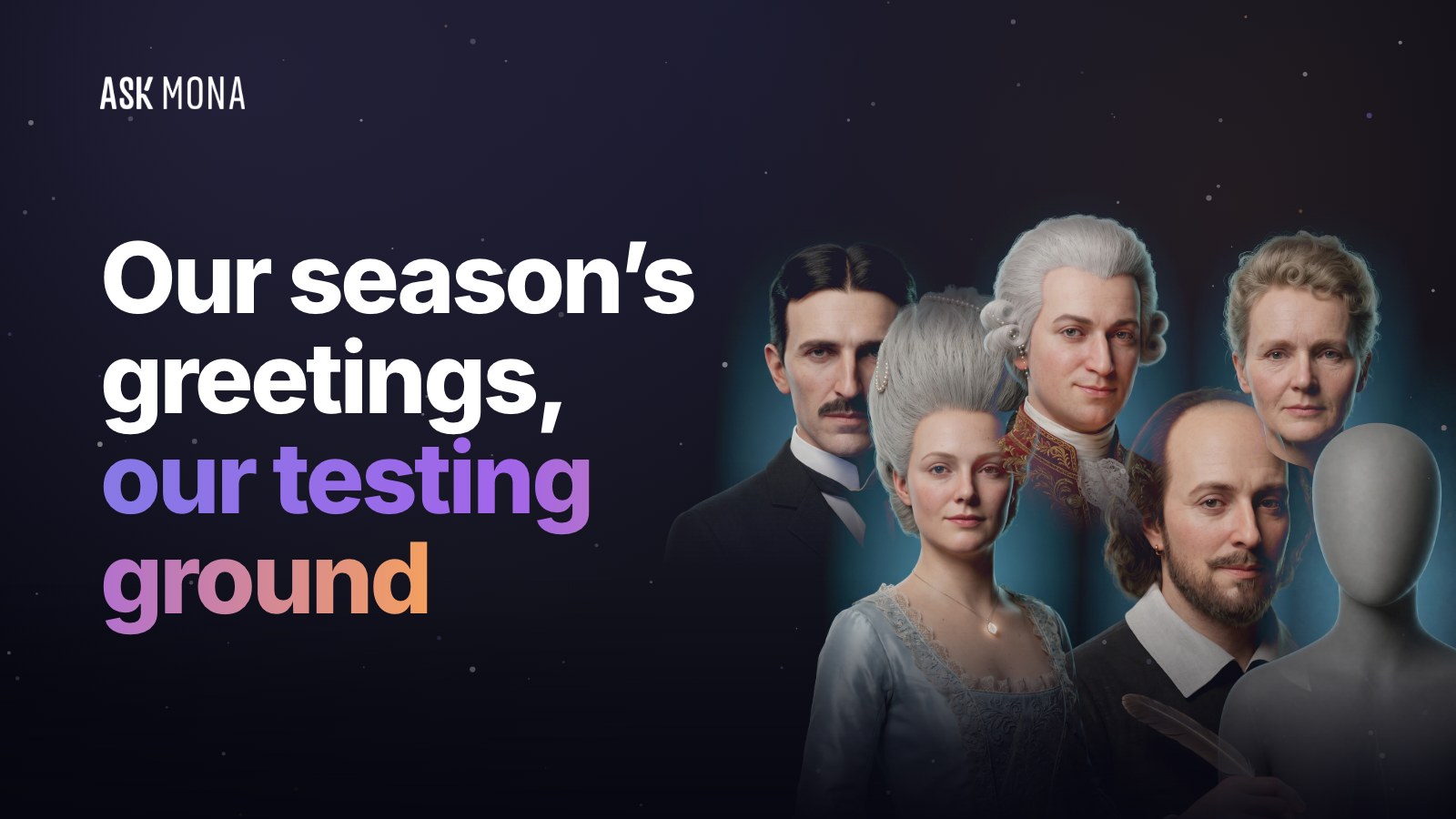
Every holiday season since 2020, we have taken the time to look at how a technology is spreading, and let our peers across the cultural sector try it, often before anyone else. In 2026, we will bring to life the historical figure of your choice, with a more faithful avatar, a voice that performs and detailed animation.
In brief
- Since 2020, our holiday greetings have let the cultural sector try a new technology: GAN, NFT, prompt art, language models, voice AI, avatar
- More than 90 culture professionals collected an NFT in 2021, and more than 150 people tried our greeting card generator in 2022
- In 2026, the public chooses the historical figure we bring to life
- Voting until November 16, avatar live on December 15
Why Take a Close Look at a Technology Every Holiday Season?
The rest of the year, our job is giving a voice to artworks, places and characters in museums and heritage sites. In December, we stop and look at a technology that is on its way: what it can actually do, and what it might change for audiences. Then we put it in the hands of our sector and our peers, in the form of our holiday greetings.
We often get there before anyone else. Our peers try it first, so they can judge for themselves what a technology could bring to their audiences. Our December 2022 greetings email put it plainly: “The holiday season is a chance to introduce you to new technologies applied to art and culture.” (Translated from the French.)
What Have We Let Our Peers Try Since 2020?
2020 · GAN: Artworks Generated by Neural Networks, Two Years Before ChatGPT
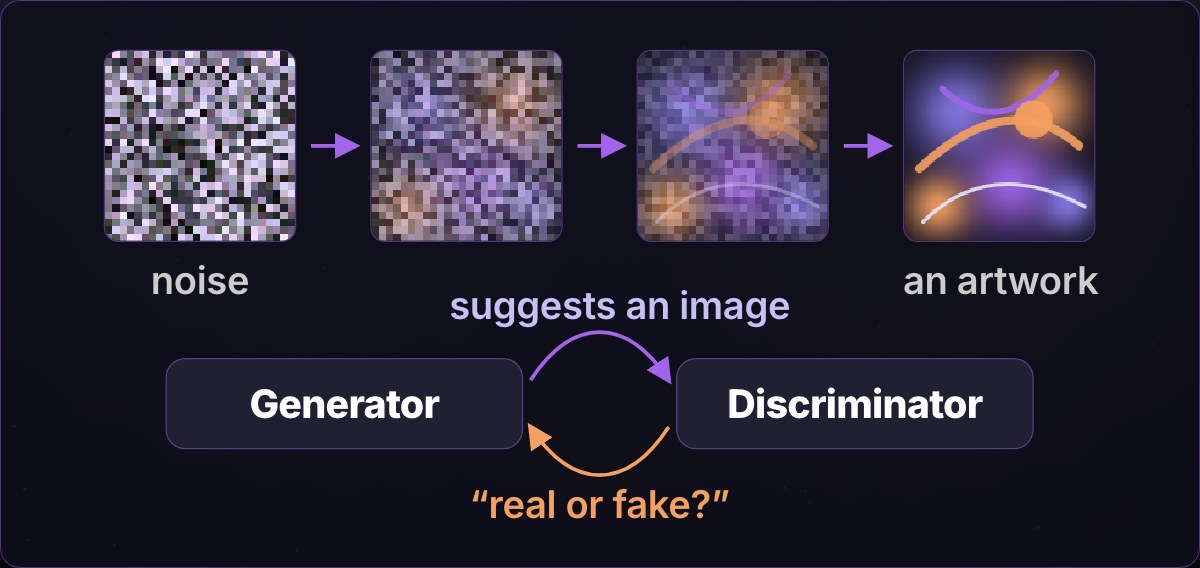
For our 2021 greetings, a chatbot asked a few questions, then a GAN generated a unique artwork for each person: two neural networks, one that produces images and one that judges whether they look convincing. It all started with a conversation.
2021 · NFT: Artists’ Works on the Blockchain, When Museums Were Barely Starting to Talk About It
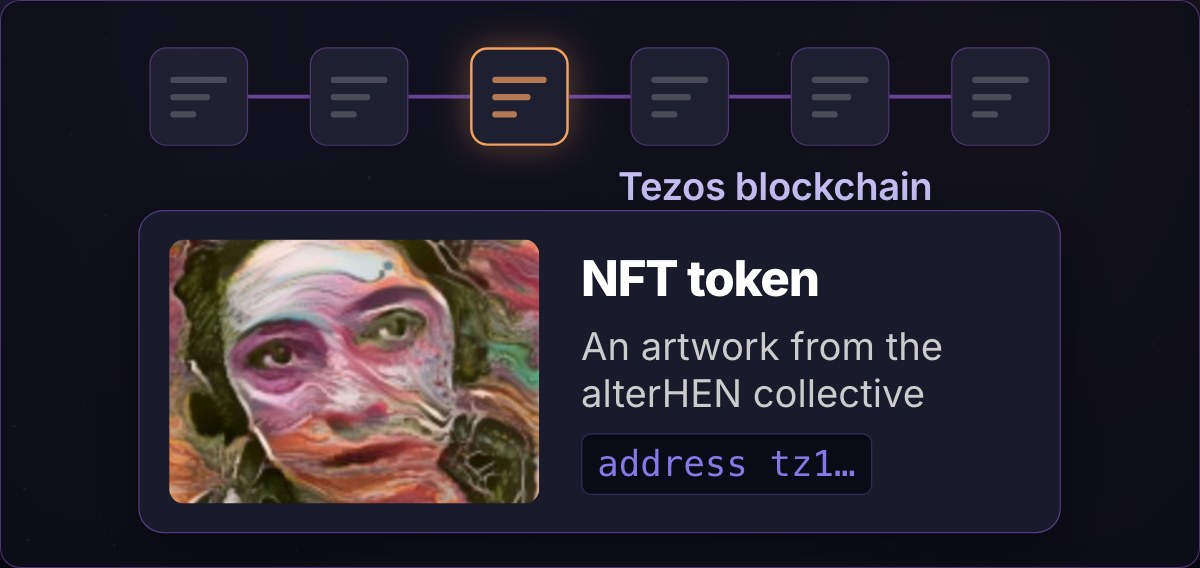
We gave cultural institutions NFTs created by the artists of the alterHEN collective, on the Tezos blockchain. More than 90 culture professionals collected one, often their first, and a webinar in January looked at what was at stake and where the limits were.
2022 · Prompt Art: A Greeting Card Generator, a Few Weeks After ChatGPT
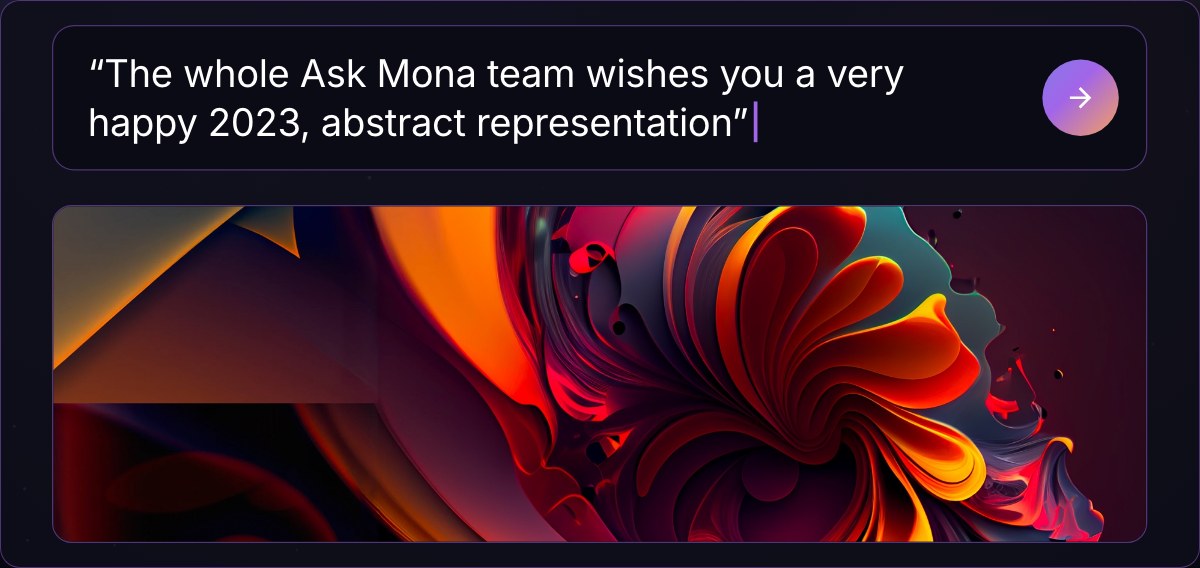
You typed a sentence, and generative AI turned it into a greeting card. More than 150 people tried it. Our own card came from the prompt “The whole Ask Mona team wishes you a wonderful 2023, abstract representation” (translated from the French).
2023 · Language Models: The Mona Lisa Answers
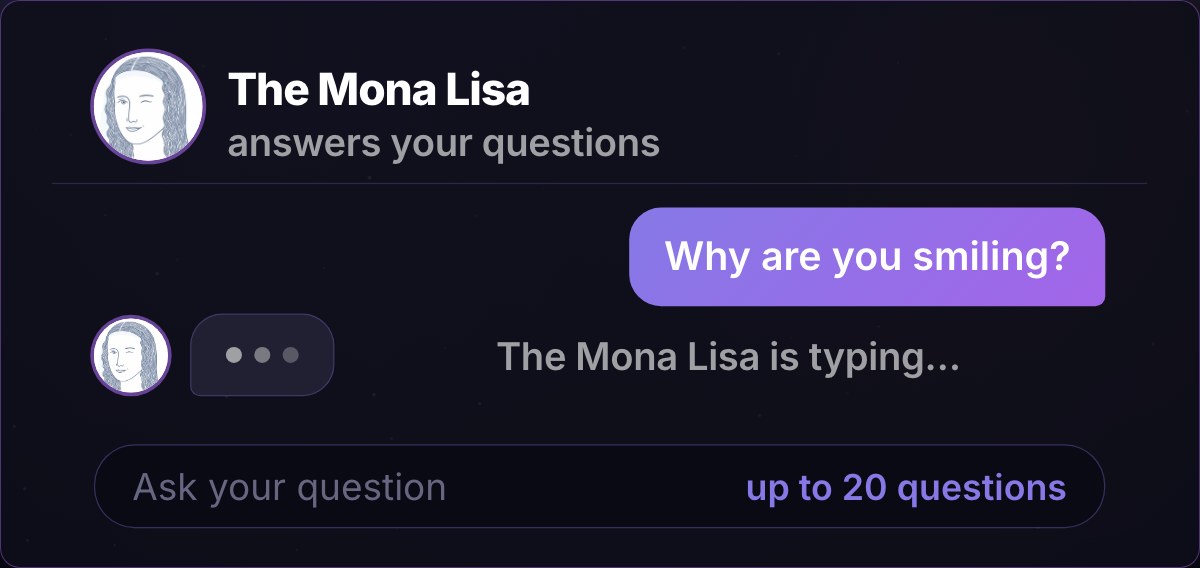
“Chat with the Mona Lisa” offered twenty questions for the painting. For the first time in our greetings, the artwork itself did the answering, in its own tone and with only what it could plausibly know.
2024 · Voice AI: Santa on the Phone, in Real Time
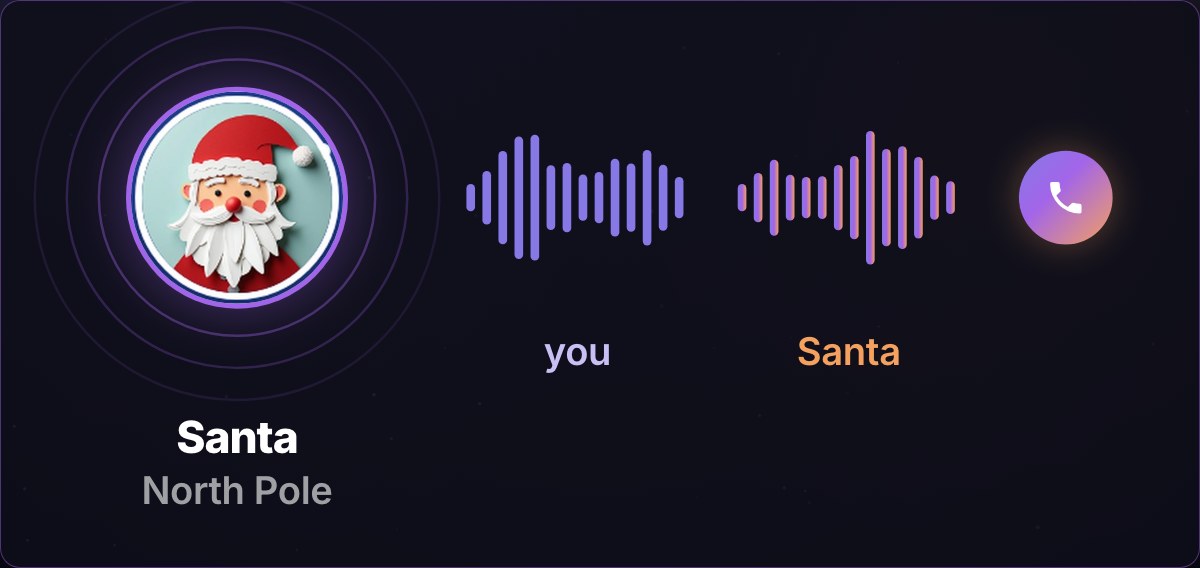
“Allô Père Noël ?” (“Hello, Santa?”): you called Santa, and he answered out loud. Our agents now answer out loud in museums.
2025 · Avatar: Santa Listens, Answers, Comes Alive
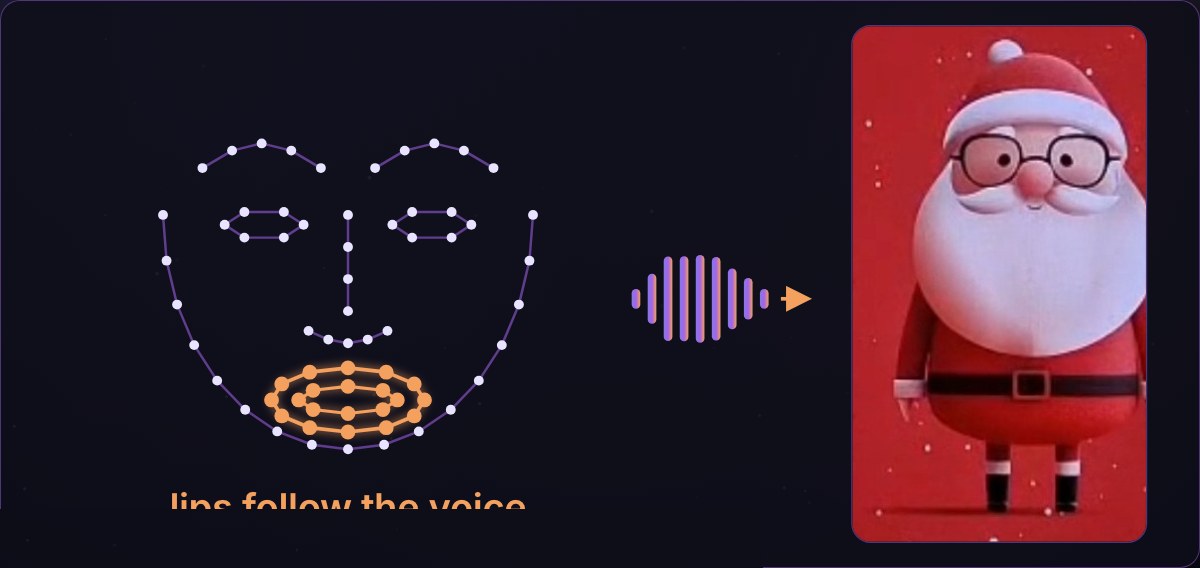
Santa got a face: he listened, answered and ran a quiz, his lips synced to his voice in real time. “The technique is quite impressive,” wrote the Domaine national de Chambord (“La technique est assez impressionnante” in the original French).
What’s New in 2026?
In 2025, we gave Santa a face. In 2026, we are bringing back someone who actually lived. The avatar is more faithful. The voice performs, with an accent, laughter, sighs. And the facial animation is far more detailed.
Bringing back a real person also takes sources: what they wrote, what historians have established, and what has been pinned on them without evidence. Marie Antoinette never said “Let them eat cake.” Rousseau gives the line to “a great princess” in his Confessions, written when she was about ten and still living in Vienna. A well-built avatar should be able to tell you that.
And for the first time, the public decides, which matters a lot to us: our agents answer whatever questions people choose to ask, and this time people also choose who answers. You can vote for any historical figure, or for one of the five we suggest: Marie Antoinette, Mozart, Nikola Tesla, Marie Curie and William Shakespeare. Three of them give you a preview in the video.
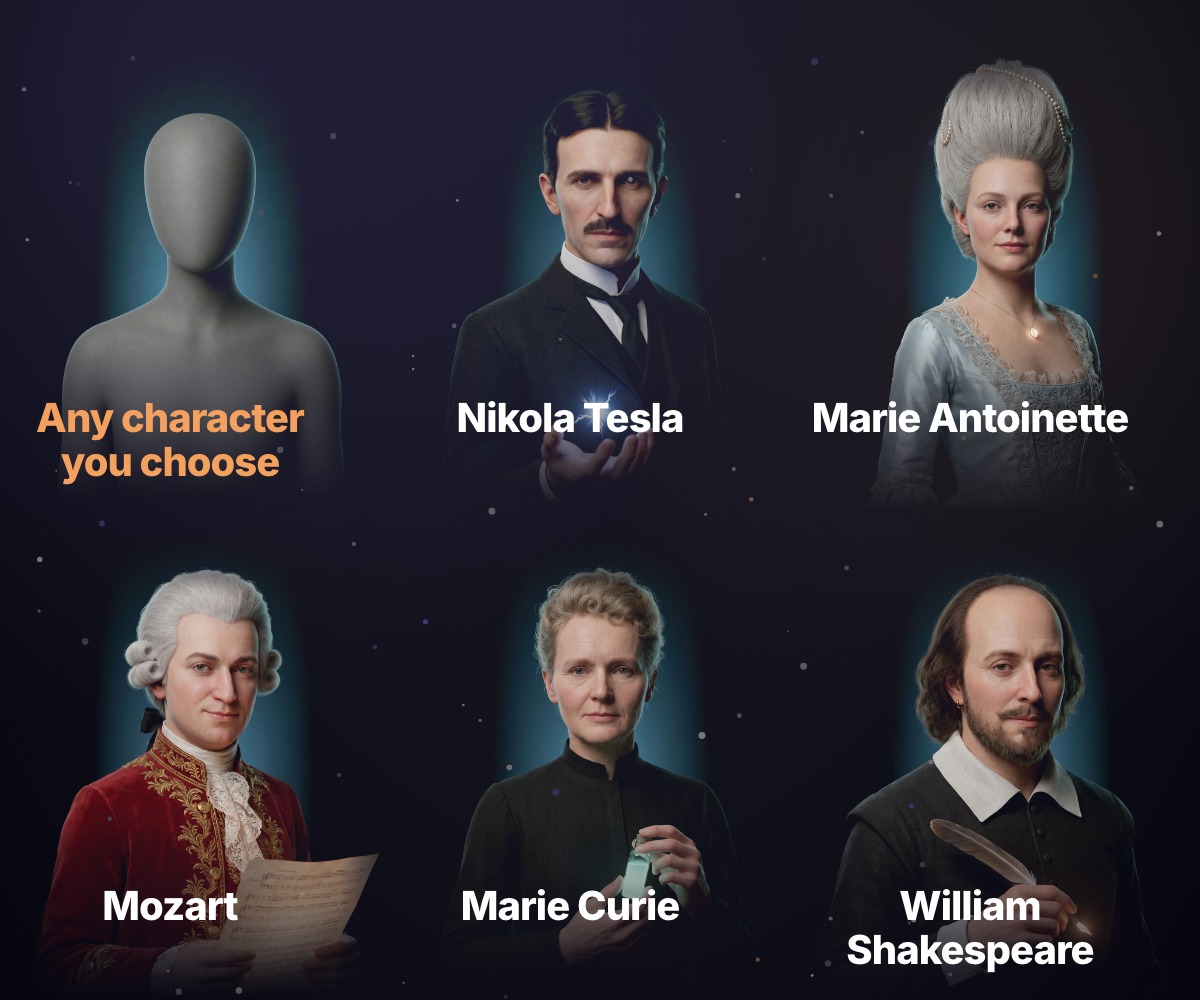
Voting is open until November 16. The podium will be revealed on Friday, November 20, on LinkedIn and by email to every voter. The avatar goes live on Tuesday, December 15, and voters get early access.
How Do I Vote?
It takes thirty seconds at askmona-noel-2026.netlify.app: any character you like, or one of the five we suggest. One vote per email address.

Who would you like to talk to this Christmas?


Take the
next step