
Paris Musées: one day to understand AI and start setting the rules
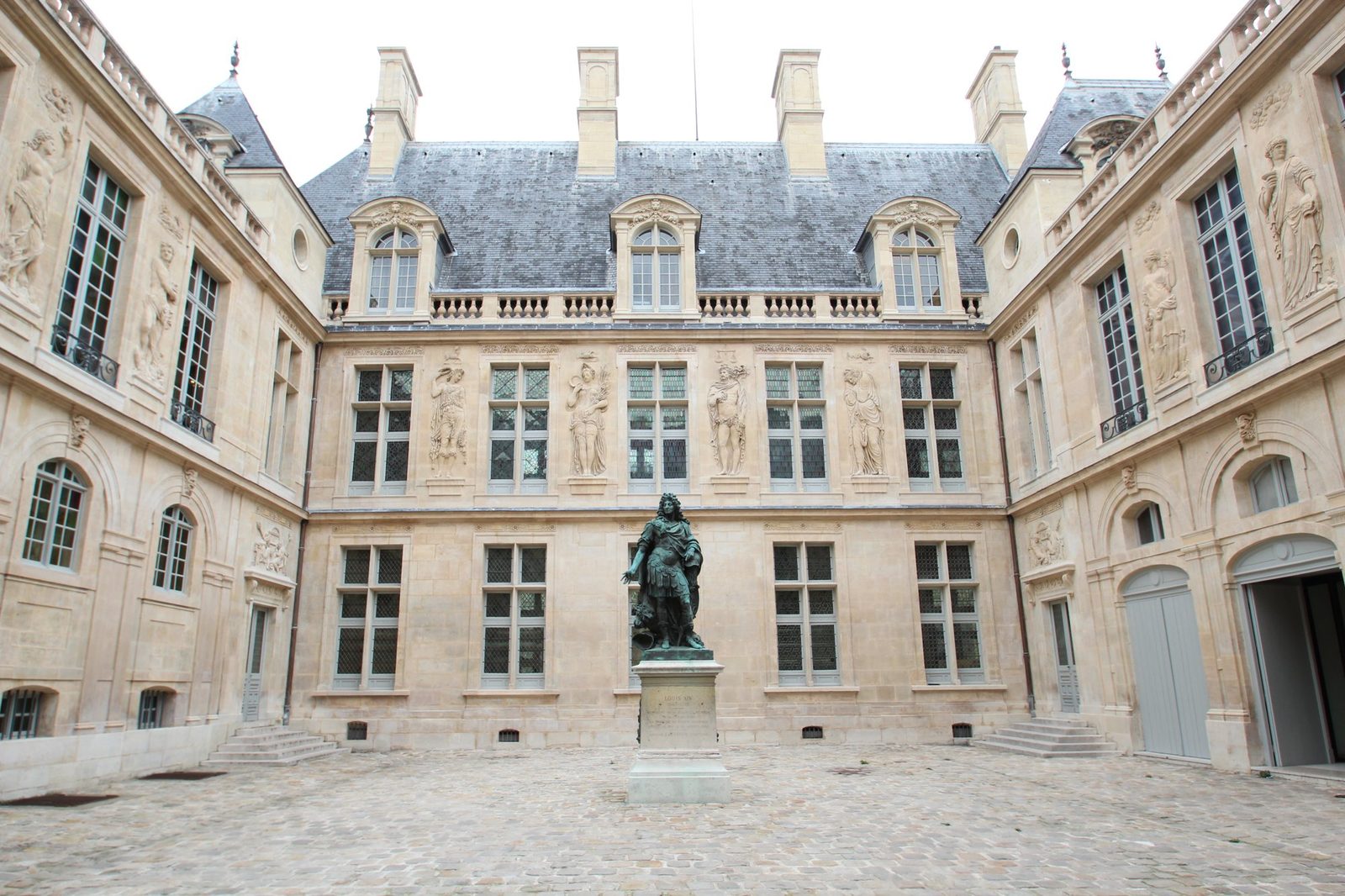
At the Musée Carnavalet, visitors put their questions to a conversational agent built by Ask Mona. On September 11, it was the turn of Paris Musées' communications teams to ask theirs, about how these tools work on the inside. Around ten managers spent a full day at the Paris Musées headquarters on rue de Chabrol: the central team, along with staff from the Carnavalet, Cernuschi, Bourdelle and Cognacq-Jay museums. The goal was to understand how generative AI works, use it on their own projects, and set the first shared rules.
Why start with communications
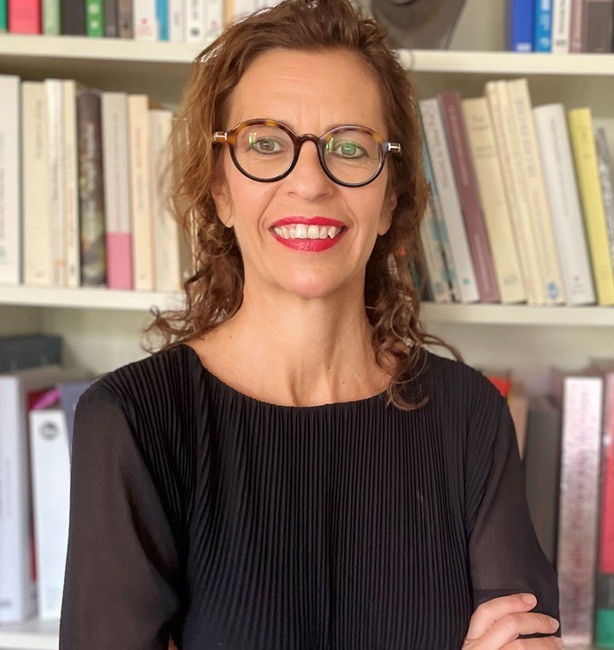
Agnès Benayer, Director of Development, Communications and Audiences at Paris Musées, initiated the session. We asked her why.
"We offered this training first to the communications managers of the City of Paris museums, with two aims: to raise their awareness of AI, and to show them very concretely how it could become a resource for certain everyday tasks. We chose communications because we now have some perspective on practices in this field. It has always evolved alongside major training and employability challenges, and it is also going through a significant transformation, for instance in search strategies, source verification and reputational risk."
The day was prepared in advance with her team. The afternoon exercises were built on real Paris Musées cases, not generic examples.
Morning: what's under the hood
Skill levels around the table varied widely. Some participants used AI every week, others had barely opened it. So we started with an open round: who has tried generative AI, who uses it at work, who has caught it hallucinating.
We then looked at how the tools work: neural networks, large language models, and the diffusion models that generate images. The goal was for everyone to know what the tool does well and where it goes wrong.
For communications professionals, this has direct consequences. A model that confidently invents a date means fact-checking before publication has to be rethought. Answer engines, which respond in place of search result pages, change how a museum works on its search visibility. And a generated image raises questions of rights, representation bias and AI disclosure. Each of these touches on reputational risk, and they took up a large part of the discussion, environmental footprint included.
Afternoon: their own projects
The afternoon began with account setup: privacy, custom instructions, tone. We covered the basics of prompting, then everyone applied them to their own work, such as adapting an exhibition announcement for Instagram, LinkedIn and the newsletter, or turning a curatorial text into a post for a general audience without losing accuracy.
Next we explored the working environment around the model, known as the harness. Projects group conversations and documents around a single piece of work, and each participant set one up for a "Night of Museums" campaign. Memory lets the tool retain the institution's context. Connectors link it to everyday tools, and skills turn a recurring task into a reusable capability. The day continued with an image-generation prompt battle and a hands-on session with NotebookLM to synthesize several documents.
"The training was all the more relevant because we had been able to discuss its scope beforehand. Since participants had very uneven knowledge and practice, we chose to devote the morning to a 'theoretical' session defining AI and the existing tools. These discussions covered many practical, ethical and environmental issues and set the training at the right level, allowing everyone to position themselves and speak about their relationship with AI: their uses, their concerns or their appetite for it. The afternoon was devoted to case studies, alternating prompt exercises, building templates through practice, and individual coaching from the trainer. The trainer's knowledge of the museum ecosystem made it possible to target needs precisely and to enrich the discussions with observations and existing practices from the art and culture sector."
What the teams took home
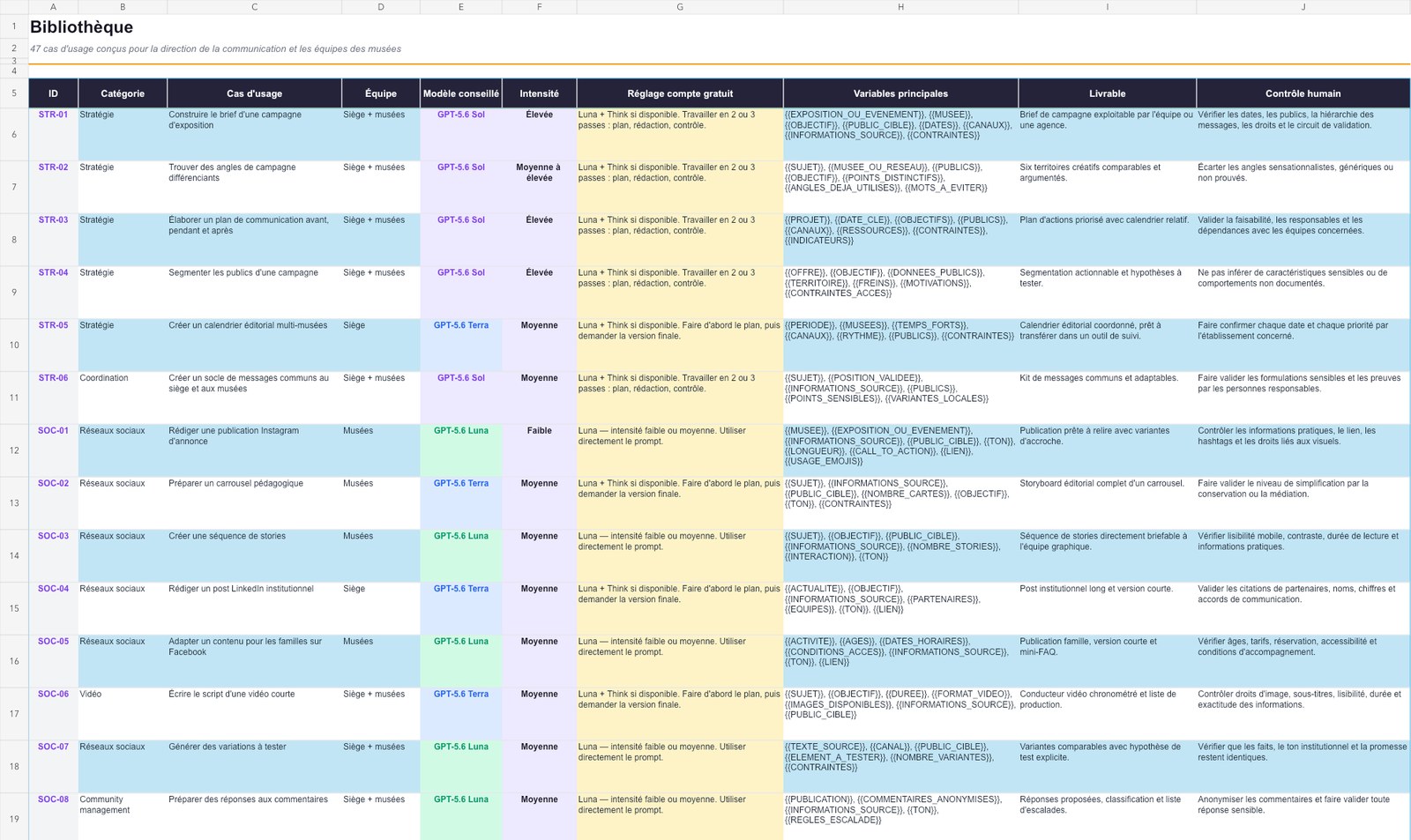
A one-day training fades quickly if nothing stays behind. So we built Paris Musées a library of 47 prompts written for the communications work of the central office and the museums. It includes the exhibition campaign brief, the educational carousel, the exhibition page, the visitor FAQ, image alt text, the press release, the holding statement for an incident and campaign results analysis. Each prompt specifies which model to use, lists the variables to replace and flags the checks to run before publishing. A separate tab lets users build their own templates.
Participants also left with the training materials and our white paper on GEO (generative engine optimization).
Setting rules before habits set in

The last part of the day dealt with governance. Drawing on the preparatory work for the City of Paris AI charter, we put six simple rules up for discussion: only use AI when it adds real value, never share sensitive data with an unauthorized tool, check facts, names and rights, stay accountable for the content (AI suggests, a person approves), disclose AI use when it is significant, and seek approval for any sensitive or new use.
These rules address a risk every institution knows. Staff are already using AI, often on personal accounts, with no one setting the framework.
"The training showed that teams were already using it to varying degrees. The 'deliverables' provided after the training will help them go further on certain 'common practices'. Broader integration into team practices will happen step by step, in consultation with City policy. For now, Copilot is used internally with still limited capabilities, and we are drafting an ethics charter for Paris Musées. For my department, which also covers digital, audiences and development, this training made it possible to approach AI openly, with a professional, job-focused approach that will help frame its uses and scope, and avoid the spread of 'shadow AI' and its consequences."
Several more sessions are being prepared for teams at other museums in the network.
Already working with Ask Mona?
Paris Musées knew AI from the visitor side, through the agent deployed at Carnavalet. With this training, its teams now approach it from the professional side: how models work, where they go wrong, and how to use them without losing control. Many institutions that work with us are at the same stage.
We support those who want to go further through the Ask Mona Academy. Every training starts with a one-hour scoping session with your teams and builds on your own projects. Valentin Schmite leads it in person, and it can extend to work on your AI charter.
Header photo: Cour Louis XIV, Musée Carnavalet, by Lionel Allorge, CC BY-SA 3.0, via Wikimedia Commons.

Train your teams in AI


Take the
next step